

TCP Leads Cargo Throughput in Southern Brazil
May, 26, 2025 Posted by Denise VileraWeek 202522
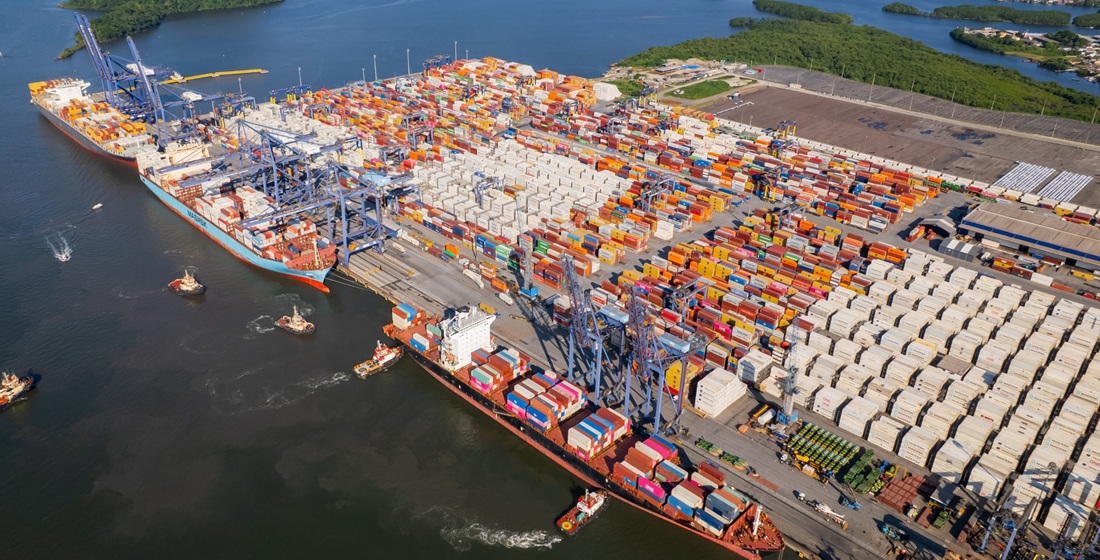
TCP, the company that operates the Paranaguá Container Terminal, was once again the leading port terminal in container throughput in Southern Brazil during the first quarter of the year. According to the latest update from ANTAQ’s Estatístico Aquaviário, TCP maintained regional leadership for the second consecutive year and rose to second place in Brazil’s national ranking of container terminal operators.
From January to March 2025, TCP handled 372,446 TEUs—including exports, imports, and transshipments—a record for the first quarter and a 5.4% increase over the same period in 2024.
“Our leadership in the last two years is a direct result of investments and strategic solutions that have positioned the Paranaguá Container Terminal as a benchmark in port management. TCP currently boasts the largest equipment fleet among Brazilian terminals, leads in the number of maritime services, and has the largest reefer yard in South America, with 5,268 plugs—already surpassing investment projections by other terminals in this segment,” stated Rafael Stein, Institutional and Legal Manager at TCP.
Record Reefer Cargo and Market Leadership
TCP also posted record-high reefer container volumes in Q1 2025, handling 35,809 refrigerated units—a 17% increase year-over-year. This secured a 40.3% market share in the meat and frozen goods segment. In March alone, TCP moved 13,890 reefer containers, 14% above its previous record of 12,204 units set in June 2024.
Over R$ 300 Million in Investments
The steady rise in performance stems from long-term strategic investments. Between 2022 and 2024, TCP invested over R$ 370 million in modernization, infrastructure expansion, and new equipment.
With the purchase of 11 new rubber-tired gantry cranes (RTGs) and 17 terminal tractors (TTs), TCP now operates Brazil’s largest fleet of RTGs (39) and TTs (69). The modernization of the terminal’s truck gate—completed in April 2024—increased hourly vehicle processing capacity by 200%, from 50 to 150 appointments.
A highlight was the 45% expansion of TCP’s reefer yard, from 3,624 to 5,268 plugs, making it the largest in South America.
As part of its decarbonization plan, TCP electrified three RTGs in a pilot project to reduce emissions. Each converted crane now emits 97% less CO₂ than its diesel-powered version.
Anticipating higher energy demand, TCP also built a cutting-edge, gas-insulated power substation (GIS F35-4) from GE within the terminal. Completed in 2023, the facility eliminated capacity bottlenecks, paving the way for further electrification and future ship-to-shore cranes (STS) acquisitions.
Expanding Global Connections
Entering 2025, TCP operates the largest portfolio of shipping services among Brazilian terminals, with 24 weekly routes, including long-haul and cabotage. This translated into 992 vessel calls in 2024—up 19% from 2023.
Container throughput is expected to grow even more with the recent increase in navigational draft, from 12.10 to 12.80 meters at zero tide. This additional 70 centimeters allows each vessel to carry up to 560 more TEUs per trip.
The deeper draft follows the completion of underwater rock removal (derrocagem) at Pedras Palanganas in the access channel. About 20,000 cubic meters of rock were removed and donated to local municipalities for use in public infrastructure projects.
Rafael Stein Santos emphasized that the successful derrocagem reflects the strong coordination between the port authority, maritime authority, and pilotage. “This project boosts our operational capacity and acts as a catalyst for regional economic development. As the access channel concession moves forward, the benefits will ripple through all sectors connected to the port,” he concluded.
-
Ports and Terminals
Mar, 14, 2025
0
Landmark Public-Private Partnership for Babitonga Bay Dredging Project Signed
-
Meat
Nov, 01, 2024
0
With more cash on hand, Marfrig aims to reduce debt
-
Mar, 16, 2026
0
DataSmart Shipping Conference 2026 begins in São Paulo with focus on Shipping 5.0
-
Meat
Nov, 16, 2022
0
Mexico opens its market for Brazilian pork